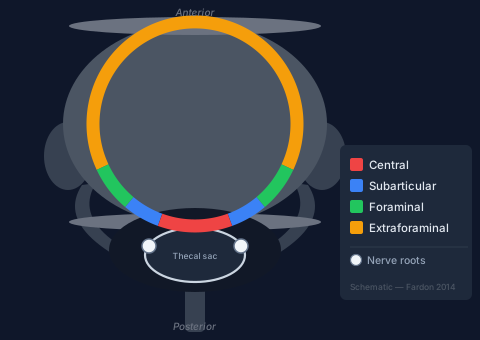
Standardized lumbar disc terminology per Fardon 2014 (version 2.0): bulge vs. herniation, herniation subtypes, annular fissure types, anatomic zones, canal compromise grading, Modic classification, and Pfirrmann grading.
Quick summary
Lumbar disc imaging findings describe anatomy and morphology only — nomenclature does not imply external etiology, relationship to symptoms, or need for treatment (Fardon 2014, endorsed by NASS, ASSR, ASNR).
Bulge vs. Herniation
Term
Definition
Notes
Bulging disc
>25% of circumference (>90°); usually <3 mm beyond apophysis
NOT a form of herniation; may be symmetric or asymmetric; causes include normal variant (especially L5–S1), degeneration, vertebral remodeling
High signal with central horizontal low signal line
Clear
Normal
III
Intermediate signal
Unclear
Normal or slightly reduced
IV
Low signal
Lost
Normal to moderately reduced
V
Homogeneous low signal
None
Collapsed
Preferred vs. Nonstandard Terms
Preferred
Avoid
Herniated disc
HNP, ruptured disc, prolapsed disc
Annular fissure
Annular tear, torn annulus
Free fragment
Sequestrum (for the isolated piece)
Degenerative disc
Degenerative disc disease (DDD)
L4–L5 disc
"L4 disc" (nonstandard level naming)
Imaging findings describe morphology only and do not establish causation of symptoms or indicate need for treatment. HIZ does not imply trauma. Modic Type I changes can mimic discitis-osteomyelitis — clinical correlation is required.
Reference
Fardon DF, Williams AL, et al. Lumbar disc nomenclature: version 2.0. Spine J. 2014;14(11):2525–2545. Endorsed by NASS, ASSR, ASNR.
More in RadCall
99+ guides, IR procedure playbooks, systematic search patterns, case logging, and wRVU tracking — all in one place.