Anatomy Overview
The glenohumeral joint is a ball-and-socket articulation in which the glenoid covers only 25–30% of the humeral head. Stability therefore depends on the labrum, joint capsule, rotator cuff, and ligaments rather than bony congruity.
Rotator cuff (SITS):
- Supraspinatus — abduction initiation
- Infraspinatus — external rotation
- Teres minor — external rotation
- Subscapularis — internal rotation and anterior stabilization
Glenoid labrum: A fibrocartilaginous ring that deepens the glenoid cavity. The anteroinferior labrum is the most common site of Bankart lesions. Note normal superior labral variants: Buford complex and sublabral foramen.
Key ligaments:
- IGHL (inferior glenohumeral ligament) — primary anterior stabilizer with the arm abducted and externally rotated
- MGHL and SGHL
- Coracoclavicular (CC) ligaments: trapezoid + conoid — provide AC joint stability
- Coracoacromial (CA) arch
Dislocation Types
| Type | Frequency | Radiograph Findings | Associated Injuries |
|---|---|---|---|
| Anterior (subcoracoid most common) | ~95% | Humeral head medial and inferior to glenoid; loss of normal glenohumeral overlap; head projects below coracoid on AP; Y-view shows head anterior to glenoid center | Hill-Sachs defect (posterolateral head impaction, |
| Posterior (often missed on AP) | ~3–4% | "Light bulb" sign — fixed internal rotation produces symmetric rounded humeral head contour on AP; vacant glenoid sign — posterior widening of glenohumeral joint space >6 mm; "trough line" sign — medial impaction; Y-view shows head posterior to glenoid center | Reverse Hill-Sachs (anteromedial "trough"); reverse Bankart (posterior glenoid rim); lesser tuberosity fracture; seizure or electrocution mechanism |
| Inferior — Luxatio Erecta | <1% | Arm clinically locked in abduction; humeral head displaced inferiorly below glenoid and inferior to coracoid on AP | Axillary nerve and artery injury; rotator cuff tear; greater tuberosity fracture; capsular tear; high-energy mechanism |
| Superior | Rare | Head displaced superiorly; AC joint disruption usually present | AC joint disruption; clavicle fracture; rotator cuff destruction |
Associated Lesions
| Lesion | Dislocation | Description | Imaging |
|---|---|---|---|
| Hill-Sachs | Anterior | Posterolateral humeral head impaction against the anteroinferior glenoid rim; cortical depression | XR: AP with internal rotation; CT or MRI; assess "on-track" vs "off-track" to determine instability risk |
| Bankart | Anterior | Anteroinferior glenoid rim fracture (osseous Bankart) or labral tear (soft Bankart) | CT: osseous fragment; MRI arthrogram: labral tear; >20–25% glenoid width = significant bone loss |
| Reverse Hill-Sachs | Posterior | Anteromedial humeral head "trough" impaction; "trough line" sign on AP XR | CT best; involvement >25% → surgical reconstruction (McLaughlin procedure) |
| Reverse Bankart | Posterior | Posteroinferior glenoid rim fracture or posterior labral tear | CT or MRI arthrogram |
| HAGL | Anterior | Humeral Avulsion of the Glenohumeral Ligament; IGHL avulses from the humeral neck | MRI: "J-sign" — axillary pouch hangs inferiorly; requires surgical repair |
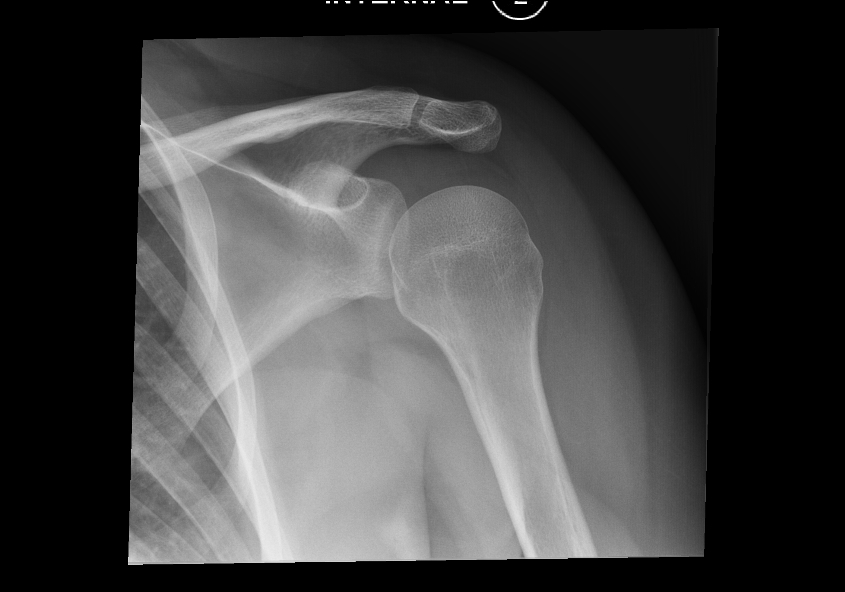
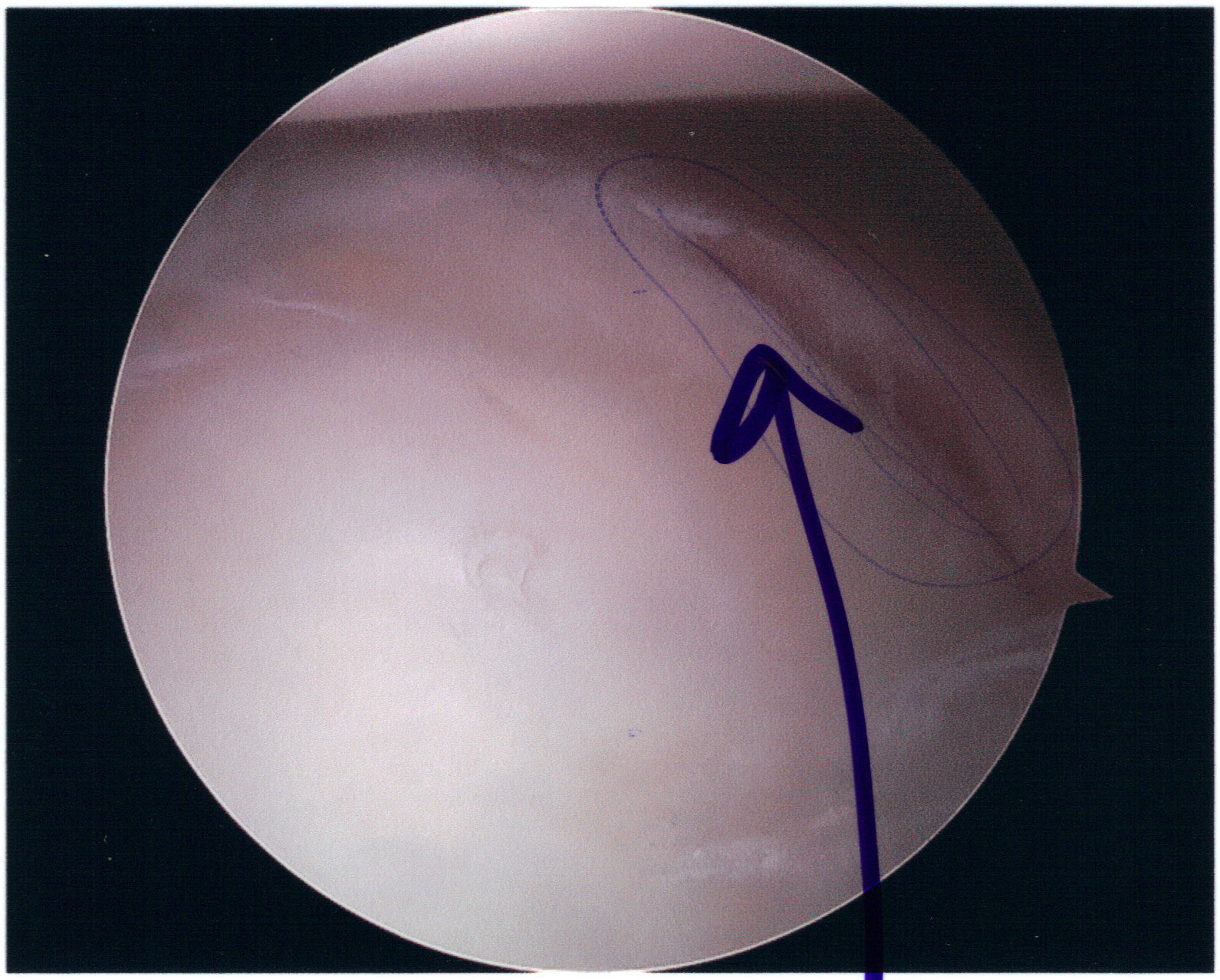
Rockwood Classification — AC Joint Injury
| Type | Ligaments Injured | Radiograph Finding | Management |
|---|---|---|---|
| I | AC sprain (CC intact) | Normal | Conservative |
| II | AC torn; CC sprained | Clavicle elevated; not above superior acromion | Conservative |
| III | AC + CC torn | CC distance 25–100% increased; clavicle above acromion | Usually conservative; surgical in high-demand patients |
| IV | AC + CC torn; clavicle displaced posteriorly | Clavicle displaced posteriorly into trapezius (best seen on axillary view) | Surgical |
| V | AC + CC torn; severe displacement | CC distance >100% increased (25+ mm) | Surgical |
| VI | AC + CC torn; muscle avulsion | Clavicle displaced inferiorly below coracoid | Surgical |
Reporting Checklist — Glenohumeral Dislocation
- Direction: anterior / posterior / inferior (luxatio erecta)
- Posterior dislocation signs: "light bulb" sign / vacant glenoid sign / trough line
- Humeral head:
- Hill-Sachs defect — location and size; is it "on-track" or "off-track"?
- Reverse Hill-Sachs "trough" — involvement >25%?
- Glenoid rim:
- Bankart fracture — osseous fragment size as percentage of glenoid width
- Reverse Bankart — posterior rim fragment
- Greater tuberosity fracture: present / displaced (>5 mm in general; >3 mm in young athletes)
- Lesser tuberosity fracture: present (marker for posterior dislocation)
- Surgical neck: associated fracture — changes management
- Post-reduction: concentricity of joint; residual fragment interposition
Reporting Checklist — Clavicle Fracture
- Fracture location: lateral / middle / medial third
- Angulation and direction of end displacement
- Comminution
- Degree of overlap — generally surgical if >100% displaced
- AC and SC joint integrity
- Coracoclavicular distance