LeFort Classification
All LeFort fractures involve the pterygoid plates — a pterygoid plate fracture is required for a true LeFort designation.
| Type | Fracture Plane | Key Feature |
|---|---|---|
| LeFort I | Horizontal fracture through the maxilla above the teeth; separates the hard palate from the upper midface | Floating palate; fracture through the lateral nasal walls, maxillary sinuses, and pterygoid plates at their bases |
| LeFort II | Pyramidal fracture through the nasal bones, orbital rims (infraorbital region), and maxillary sinuses | Floating midface; involves the nasal bridge and medial orbital walls; extends through the pterygoid plates |
| LeFort III | Craniofacial disjunction — complete separation of the facial skeleton from the skull base | Fractures through the zygomatic arches, lateral orbital walls, and nasal bridge; floating face |
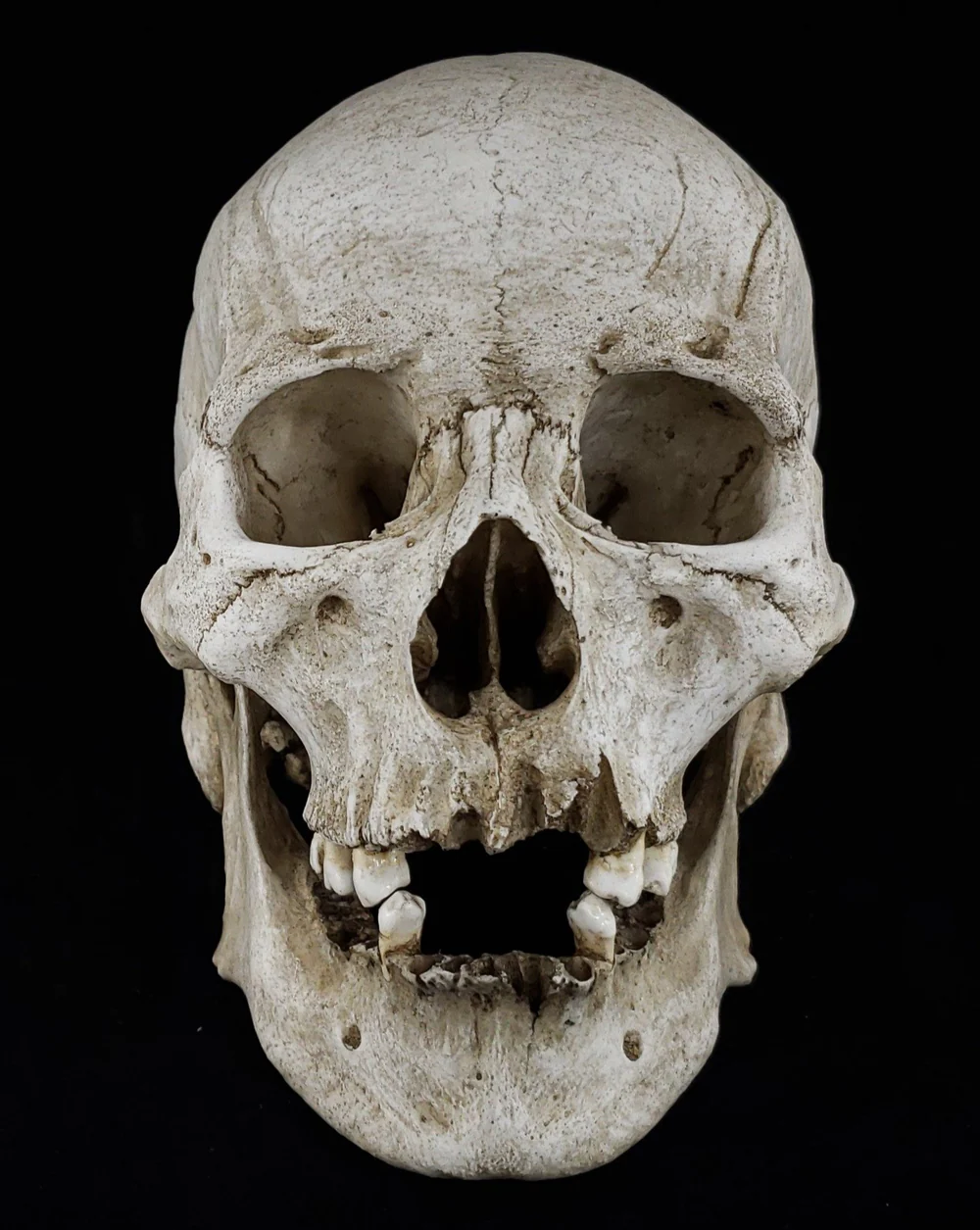
LeFort fractures are frequently asymmetric and mixed (e.g., LeFort II on one side + LeFort III on the other). Classify each side independently. Always look for associated intracranial injury and BCVI, particularly with high-energy mechanisms.
Naso-Orbito-Ethmoid (NOE) Fractures
NOE fractures involve the central midface — the nasal bones, ethmoid sinuses, and medial orbital walls. The critical structure is the medial canthal tendon (MCT), which inserts on the anterior lacrimal crest.
Markowitz Classification:
| Type | Description |
|---|---|
| I | Single large central fragment; MCT intact on fragment |
| II | Comminuted central fragment; MCT still attached to a single identifiable fragment |
| III | Comminuted with MCT detachment or insertion on a tiny bony fragment — highest instability risk; requires transnasal wiring |
Imaging findings: Look for comminution of the nasal bones and frontal process of the maxilla, posterior displacement of the central fragment, and lacrimal system involvement. Telecanthus (widened intercanthal distance) indicates MCT disruption.
Orbital Fractures
Blowout Fractures
Result from direct orbital pressure transmission to the thin orbital floor (maxillary roof) or medial wall (ethmoid lamina papyracea).
| Type | Features |
|---|---|
| Open (trapdoor) | Large bony fragment displaces without herniating soft tissue; common in adults |
| Trapdoor / greenstick | Hinge fracture with fat/muscle herniation trapped in fracture; limited displacement; more common in children; high risk of ischemic muscle injury |
Key findings to report:
- Orbital floor defect size (mm)
- Herniation of orbital fat and/or inferior rectus muscle into the maxillary sinus
- Inferior rectus entrapment (muscle belly within fracture gap — surgical urgency in children)
- Enophthalmos potential based on orbital volume change
- Medial wall fracture (lamina papyracea) — can occur alone or with floor fracture
Reporting Checklist — Midface Trauma
- LeFort type (per side if asymmetric): I / II / III / mixed; pterygoid plate involvement
- NOE fracture: Markowitz type I / II / III; MCT integrity; lacrimal system involvement
- Orbital fractures: floor / medial wall / roof / lateral wall; herniation of fat / inferior rectus; entrapment
- Zygomatic fractures: zygomaticomaxillary complex (ZMC) — 4-point involvement; displacement and rotation
- Nasal bone fractures: unilateral / bilateral; septal involvement
- Intracranial extension: anterior cranial fossa; pneumocephalus; dural breach
- Maxillary sinus: opacification, air-fluid level, comminution
- BCVI screening: carotid canal or transverse foramen involvement; GCS <6 with facial fractures
Reference
Hopper RA, Salemy S, Sze RW. Diagnosis of Midface Fractures with CT: What the Surgeon Needs to Know. RadioGraphics. 2006;26(3):783–793.