Indications & Patient Selection
Indications
- Adrenal metastases — lung (most common), RCC, melanoma, breast; oligometastatic disease or isolated adrenal progression
- Adrenocortical carcinoma — palliative ablation when surgical resection is not feasible
- Bilateral adrenal disease — renal-sparing approach; favors ablation over bilateral adrenalectomy
- Functional adenoma — selected cases (Cushing’s, Conn’s) when surgery declined or high-risk
- Technical resectability: lesion ≤5 cm preferred; central or bilateral lesions favor ablation over surgery
Contraindications
- Pheochromocytoma (relative) — must alpha-block first; see mandatory workup below
- Uncorrectable coagulopathy (INR >1.5, platelets <50K)
- Active infection
- No safe needle corridor to lesion (bowel/vessel interposition not correctable by hydrodissection)
- Relative: bilateral simultaneous ablation (adrenal insufficiency risk — plan cryo; monitor cortisol post-procedure)
Any patient with an adrenal lesion and history of hypertension, paroxysmal symptoms (headache, diaphoresis, palpitations), or incidentaloma must have biochemical workup completed before ablation. Unrecognized pheochromocytoma during ablation can cause fatal hypertensive crisis.
- 24-hour urine metanephrines + catecholamines (or plasma free metanephrines)
- If positive: alpha blockade with phenoxybenzamine ≥10–14 days pre-procedure (target BP <130/80, orthostatic drop <10 mmHg)
- Beta-blocker added only after adequate alpha blockade (never first — risk of unopposed alpha = hypertensive crisis)
- Anesthesia MUST be notified for all pheo cases
- Have phentolamine 1–5 mg IV and nitroprusside infusion at bedside; labetalol IV available
Pre-Procedure Workup
- CT chest/abdomen/pelvis with contrast (staging; assess lesion size, proximity hazards, safe corridor)
- PET/CT if unknown primary
- Serum cortisol, DHEA-S, aldosterone if functional concern
- 24h urine metanephrines + catecholamines (mandatory)
- INR, CBC, BMP
- Cardiology clearance for pheochromocytoma cases
Pre-Procedure Checklist
Modality & Equipment
- CT guidance preferred for all adrenal ablations
- MWA probes: Neuwave or Medwaves 17G — preferred for adrenal (larger, more reliable ablation zone; less heat-sink susceptibility)
- RFA cool-tip or RITA Star: for lesions <3 cm; use D5W hydrodissection only (not NS — arcing risk)
- Cryoprobe array: for larger lesions, bilateral simultaneous cases, or cryo-preferred anatomy
- Patient positioning: prone (posterior approach preferred) or lateral decubitus
Hydrodissection & Medications
- D5W 100–200 mL for hydrodissection — displaces adjacent bowel, stomach, pancreas; D5W only (not NS) for RFA cases
- Cefazolin 1 g IV pre-procedure
- Anesthesia: general anesthesia or deep sedation for all cases
- BP monitoring every 60 seconds for pheo cases
- Pheo emergency meds at bedside: phentolamine, nitroprusside, labetalol IV
Relevant Anatomy
Right Adrenal
- Located posterior to the IVC, between the liver and right kidney, superior to the right renal hilum
- Shape: "Y-shaped" or triangular on CT; medial limb abuts IVC posterolateral wall
- Proximity hazards: IVC (medial), right renal vein (inferior), duodenum (anterior/inferior), liver (anterior)
- Posterior approach: between 12th rib and iliac crest, aim medial to right kidney; avoid pleural reflection superiorly
Left Adrenal
- Located medial to the left kidney, posterior to the tail of the pancreas and splenic vessels; more caudal and medial than right
- Shape: "V-shaped" or semilunar on CT
- Proximity hazards: splenic vein (anterior), tail of pancreas (anterior), stomach, spleen (lateral)
- Posterior trans-paraspinal approach preferred; medial to left kidney
Blood Supply
- Superior suprarenal artery — from inferior phrenic artery
- Middle suprarenal artery — directly from aorta
- Inferior suprarenal artery — from renal artery
- Rich, multisource supply: good RFA/MWA heating target but also means elevated hemorrhage risk and heat-sink effect near medial border
- Single central vein drains each adrenal (right: directly into IVC; left: into left renal vein)
Ablation Margin Goal
- Ablation zone must achieve 1-cm margin around entire lesion
- Critical border: medial margin near vessels is where residual viable tissue most often persists (heat sink)
- Confirm complete coverage on immediate post-ablation CT before needle withdrawal
- Cryo: ice ball must encompass entire lesion with 1-cm margin; confirm on CT every 5 min during freeze
Step-by-Step Technique
Positioning & CT Planning
Hydrodissection
Anesthesia & BP Monitoring (Pheo Protocol)
Probe Advancement
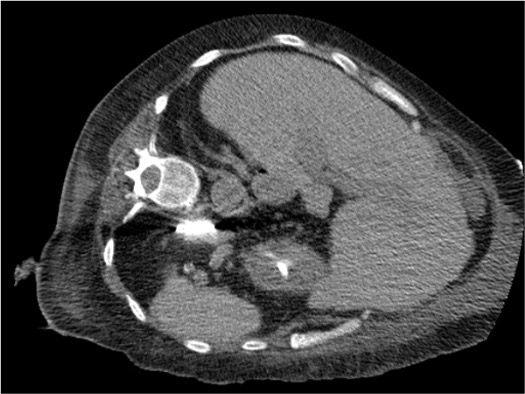
Ablation
Immediate Post-Ablation CT
Hypertensive Crisis Management (If Pheo)
Recovery & Monitoring
Adrenal Ablation vs. Adrenalectomy — Indications Comparison
| Feature | Percutaneous Ablation | Surgical Adrenalectomy |
|---|---|---|
| Lesion size | ≤5 cm preferred; technically feasible up to 7 cm with overlap | Any size; preferred for large or locally invasive lesions |
| Bilateral disease | Preferred — treat both in one session (cryo); avoids adrenal insufficiency better than bilateral resection | Bilateral adrenalectomy requires lifetime steroid replacement |
| Surgical risk | Ideal for high surgical risk, poor PS, anticoagulation | Standard resection; laparoscopic preferred for ≤6 cm |
| Pheochromocytoma | Feasible with proper prep; higher hemodynamic risk; requires alpha-block ≥10–14 days | Gold standard for pheo; surgeon more able to control bleeding |
| Primary adrenocortical carcinoma | Palliation; not curative intent | Preferred for resectable ACC (en-bloc resection) |
| Recurrence (1 yr) | 10–20% for lesions >3 cm | Margin-dependent; lower for complete R0 resection |
Community Cards
CT Landmarks & Approach Planning
Right Adrenal — CT Approach
- Posterior approach: skin entry between 12th rib and iliac crest, lateral paraspinal musculature
- Aim medial to right kidney; trajectory directed toward adrenal limb harboring the lesion
- Avoid IVC and right renal vein (medial and inferior boundaries); confirm safe distance on axial planning CT
- Superior approach: risk of pleural transgression if above 12th rib — confirm pleural reflection on coronal scout
- Duodenum risk (anterior/inferior to right adrenal) — hydrodissection mandatory if <1 cm clearance
Left Adrenal — CT Approach
- Posterior trans-paraspinal approach: needle passes through paraspinal musculature, medial to left kidney
- Pancreatic tail anterior hazard — D5W hydrodissection to displace anteriorly before probe placement
- Stomach and spleen lateral; do not cross splenic parenchyma
- Splenic vein runs anterior to adrenal — confirm clearance on axial and coronal CT pre-planning
Hydrodissection Confirmation
- Confirm D5W spread on CT after injection: low-density fluid plane should interpose between adrenal lesion and adjacent structures
- Target ≥1 cm fluid separation from critical structure before advancing ablation probe
- If spread inadequate: additional D5W injections or try different needle angle / entry point
- D5W (not NS) for RFA cases — D5W is a poor electrical conductor and will not arc; NS conducts current and causes non-target thermal injury
Cryoablation Ice Ball Monitoring
- Obtain CT every 5 min during freeze cycle to assess ice ball extent
- Ice ball must encompass entire lesion with 1-cm margin on all borders
- Ice ball appears as low-density region on CT (similar to gas); correlates with lethal isotherm —20°C at inner margin
- Lethal isotherm typically 5–7 mm inside visible ice ball edge; plan ablation margin accordingly
- Bilateral simultaneous cryo: monitor both ice balls; ensure no ice ball fusion across midline near aorta
Troubleshooting
Hypertensive Crisis (Unrecognized / Undertreated Pheochromocytoma)
Systolic BP >180 mmHg or hypertensive urgency during ablation. Pause procedure immediately. Phentolamine 1–5 mg IV bolus → repeat every 5 min as needed. If sustained: nitroprusside infusion (0.25–10 mcg/kg/min, titrate). Have ICU notified. After crisis resolved and hemodynamics stable ≥5 min, may resume with anesthesia clearance. If pheo was not previously identified: abort case; complete alpha blockade before rescheduling.
Inadequate D5W Spread / Insufficient Separation from Critical Structure
Inject additional D5W (50–100 mL more); reconfirm on CT. Try repositioning the hydrodissection needle to a different angle or more medial/lateral entry. If bowel loops still cannot be displaced >1 cm from target, consider aborting or changing approach corridor. Never ablate with critical structure <1 cm from planned ablation zone margin.
Incomplete Ablation Zone on Post-Ablation CT
Before withdrawing the probe: reposition tip to the undertreated margin and perform a second overlapping ablation. Document both ablation zones on CT. If the unablated margin is adjacent to the IVC or major vessel (heat sink), maximize power and confirm zone with delayed CT. Do not withdraw until coverage is confirmed. Residual viable tissue at margin = local recurrence.
Posterior Pleural Transgression — Occurs in 15–20% of Cases
Small pneumothorax (<15%): observe; supplemental O2; repeat CT at 1–2h. Symptomatic or >15%: aspiration via small-bore chest tube (8–10 Fr). Most resolve without intervention if <20%. Ensure trajectory is below 12th rib on planning CT to minimize pleural risk. If posterior approach below 12th rib is not feasible, lateral decubitus positioning may improve corridor.
Bradycardia After Probe Removal (Post-Pheo)
Rebound vagal response or abrupt catecholamine withdrawal after ablation of pheochromocytoma. Atropine 0.5–1 mg IV; repeat if needed. Monitor on telemetry. Expected and transient; usually resolves within minutes. Ensure anesthesia/CRNA aware and prepared before probe removal.
Complications
Serious Complications
- Hypertensive crisis (pheochromocytoma) — <1% with proper alpha-blockade; potentially fatal if unprepared; most dangerous scenario in adrenal ablation
- Hemorrhage / adrenal hematoma — 5–8%; rich adrenal vascularity; usually self-limiting; embolization if active extravasation on CT; monitor H/H × 4h
- Injury to adjacent structures — duodenum (right side), tail of pancreas or spleen (left side); hydrodissection is primary prevention; bowel injury may require surgical consult
- Local recurrence — 10–20% at 1 year for lesions >3 cm; most occur at medial margin (heat sink from vessels)
Minor / Expected Complications
- Pneumothorax — posterior approach; 15–25%; usually small and self-limiting; chest tube if >15% or symptomatic
- Post-ablation syndrome — low-grade fever, fatigue, malaise 3–7 days post; supportive care
- Transient adrenal insufficiency — bilateral ablation; monitor serum cortisol day 1; stress-dose hydrocortisone if symptomatic (BP instability, fatigue)
- Back pain / flank pain — common; NSAIDs/opioids PRN; usually resolves <1 week
Surveillance Imaging — Follow-up Schedule
| Timepoint | Modality | What to Look For |
|---|---|---|
| 1 month | CT abdomen/pelvis with contrast | Baseline post-ablation appearance; establish ablation zone size and morphology |
| 3 months | CT or PET/CT | Enlarging enhancement at margin = local recurrence; compare to 1-month baseline |
| 6 months | CT abdomen/pelvis with contrast | Local recurrence; new metastases |
| 12 months | CT or PET/CT | Confirm durable local control; systemic disease assessment |
Critical Pearls
Unrecognized pheochromocytoma is the single most dangerous scenario in adrenal ablation. Any patient with hypertension, paroxysmal symptoms, or adrenal incidentaloma requires 24h urine metanephrines before ablation. A negative metanephrine result is required to proceed safely. If elevated: phenoxybenzamine ≥10–14 days, then beta-blockade (never beta-first). Cardiologist clearance recommended.
D5W does not conduct electricity and will not arc. Normal saline conducts current — using it with RFA will cause arcing through the hydrodissection fluid into non-target structures. This is a critical safety rule for adrenal ablation with RFA. MWA is less susceptible but D5W remains preferred for all adrenal hydrodissection.
Residual viable tissue at the ablation margin is the strongest predictor of local recurrence. The probe type matters less than achieving complete coverage with 1-cm margin. Confirm margin on post-ablation CT before probe withdrawal. If margin is inadequate at the medial border (heat sink from vessels), reposition and ablate again before ending the case.
Microwave ablation produces larger, more reliable ablation zones with less susceptibility to heat-sink effect from the adrenal’s rich blood supply. RFA is acceptable for small lesions (<3 cm) but requires D5W hydrodissection and is more affected by perfusion cooling near the medial vascular border.
Bilateral adrenal metastases can be treated in a single session with cryoablation using multiple probes. Cryo allows simultaneous multi-probe placement without risk of arcing and provides real-time ice ball monitoring on CT every 5 min. Monitor serum cortisol post-procedure — transient adrenal insufficiency is possible after bilateral ablation; stress-dose hydrocortisone if symptomatic.
CT at 1 month establishes the baseline ablation zone appearance. Any new or growing nodular enhancement at the margin on subsequent imaging = local recurrence until proven otherwise. Compare all follow-up scans to the 1-month baseline. PET/CT at 3 and 12 months is preferred for metabolically active primary tumors (melanoma, RCC) where CT enhancement changes may be ambiguous.
References & Resources
Pheochromocytoma Preparation
- Pacak K, Eisenhofer G, Ahlman H, et al. Pheochromocytoma: recommendations for clinical practice from the First International Symposium. Ann NY Acad Sci. 2006;1073:1–20.
- Phenoxybenzamine dosing: start 10 mg BID; titrate to BP <130/80 with orthostatic drop <10 mmHg; typical duration ≥10–14 days pre-procedure
- Beta-blockade added only after ≥3–7 days of adequate alpha blockade; atenolol or metoprolol preferred
Primary References
- Faintuch S, Gandhi RT, Ganguli S, eds. Interventional Oncology: Practical Guides in Interventional Radiology. Thieme; 2016. Ch. 2: Venkatesan AM, Wood BJ. Adrenal Malignancy Ablation.
- Welch BT, Atwell TD, Nichols DA, et al. Percutaneous image-guided adrenal cryoablation: procedural considerations and technical success. Mayo Clin Proc. 2011;86(11):1063–1067.
- Pacak K, Eisenhofer G, Ahlman H, et al. Pheochromocytoma: recommendations for clinical practice from the First International Symposium. Ann NY Acad Sci. 2006;1073:1–20.
- Venkatesan AM, Locklin J, Dupuy DE, Wood BJ. Percutaneous ablation of adrenal tumors. Tech Vasc Interv Radiol. 2010;13(2):89–99.
- Gupta P, Bhatt S, Bhatt S, Raman JD. Adrenal tumor ablation. Semin Intervent Radiol. 2014;31(2):171–178.