Classification by Distribution and Gestational Age
Neonatal Chest Patterns
| Diagnosis | Key Imaging Features | Clinical Context |
|---|---|---|
| HMD / RDS (Hyaline Membrane Disease / Respiratory Distress Syndrome) | Diffuse bilateral granular ("ground-glass") pattern; air bronchograms; low lung volumes | Premature infant; surfactant deficiency; improves with surfactant therapy |
| TTN (Transient Tachypnea of the Newborn) | Perihilar streaking; fluid in fissures (especially right minor fissure); symmetric; resolves within 24–48h | Term or near-term; delayed clearance of fetal lung fluid; benign and self-limited |
| MAS (Meconium Aspiration Syndrome) | Coarse, asymmetric opacities; bilateral hyperinflation; air trapping; high risk for pneumothorax | Post-term infant; meconium-stained amniotic fluid; can cause severe respiratory compromise |
| Neonatal Pneumonia | Indistinguishable from HMD on CXR; may show focal consolidation | Consider in Group B Strep (GBS) exposure, maternal fever, prolonged rupture of membranes; blood cultures essential |
| BPD (Bronchopulmonary Dysplasia) | Hyperinflation; cystic lucencies; linear fibrotic stranding; heterogeneous opacification | Chronic lung disease: oxygen requirement at 28+ days of life; sequela of prolonged ventilation and prematurity |
| PIE (Pulmonary Interstitial Emphysema) | Linear and cystic lucencies radiating from hilum; can be unilateral or bilateral | Complication of mechanical ventilation in HMD; air dissects into perivascular and perilymphatic spaces |
Chest Radiograph Examples
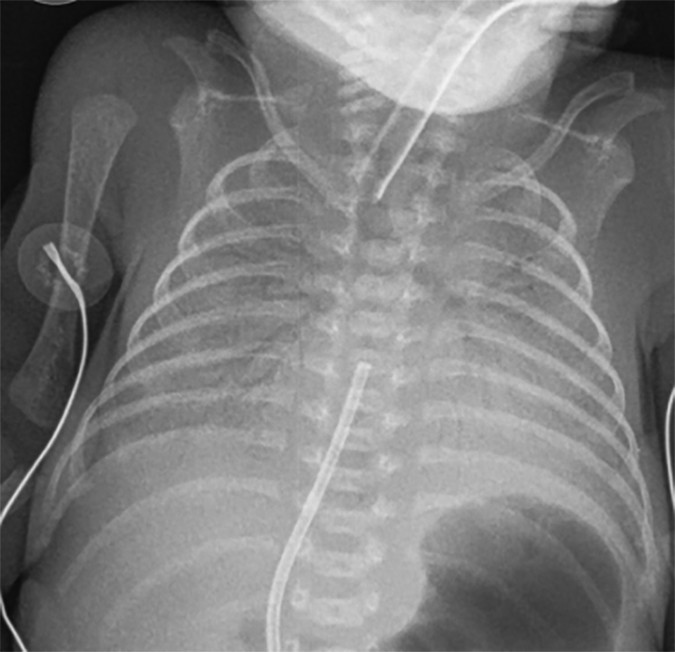
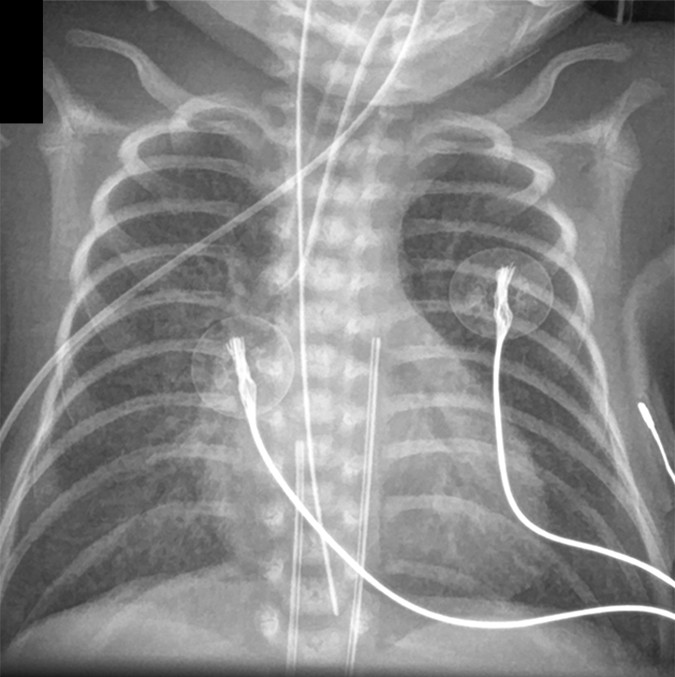
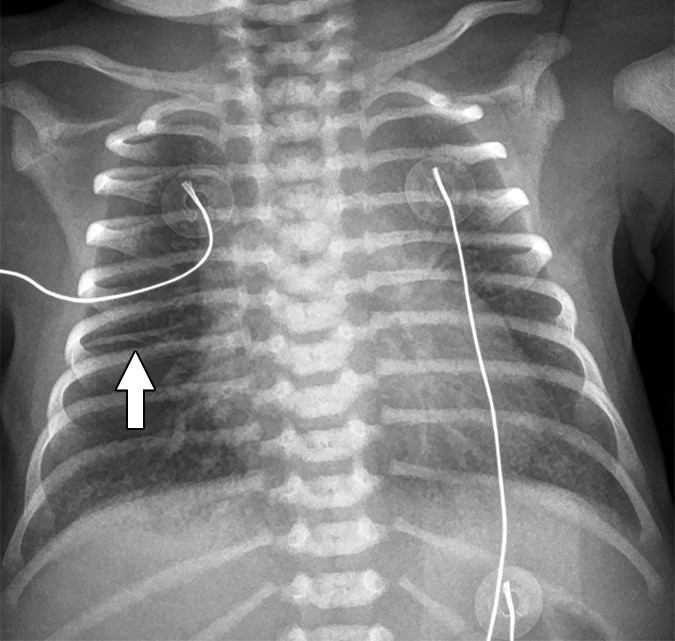
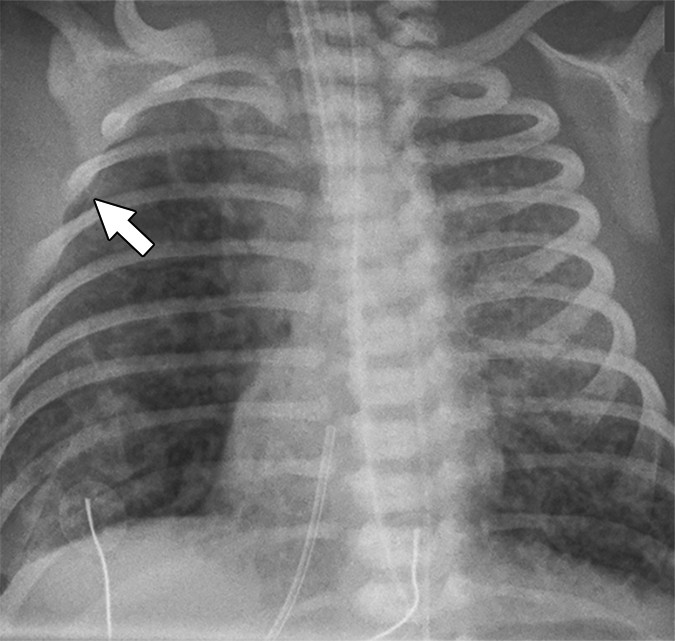
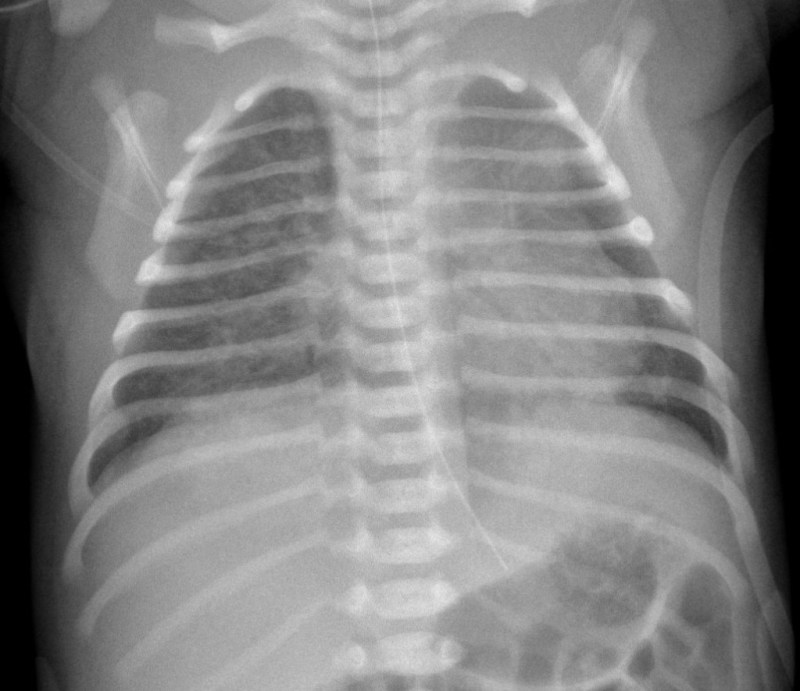
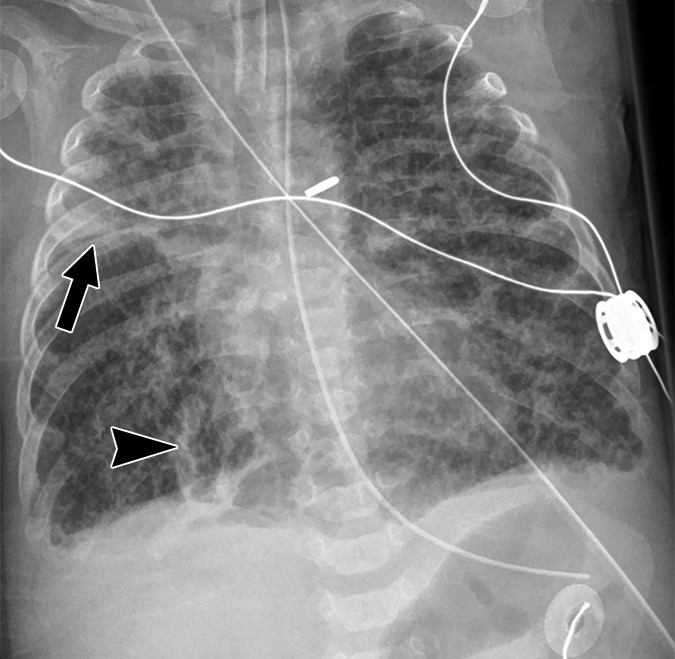
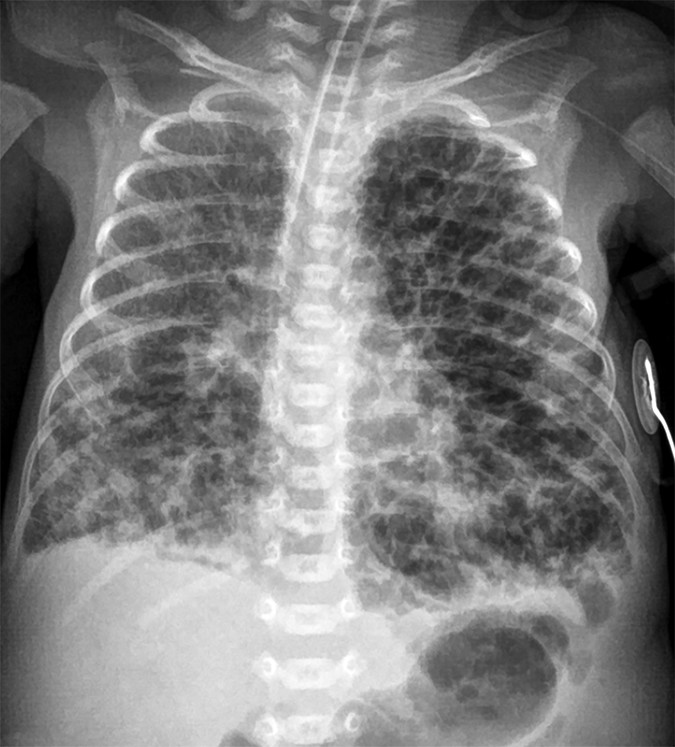
HMD vs. neonatal pneumonia: These two diagnoses are radiographically indistinguishable. In any premature infant with a diffuse granular pattern, especially with risk factors (maternal GBS colonization, prolonged rupture of membranes, maternal fever), treat empirically for pneumonia while awaiting cultures.
PIE is a ventilator complication distinct from pneumothorax — the air is interstitial, not pleural. Unilateral PIE may be managed with selective intubation of the contralateral bronchus. Bilateral PIE carries significant morbidity.
Pattern by Gestational Age
| Gestational Age | Most Likely Diagnoses |
|---|---|
| Premature (<37 weeks) | HMD/RDS (most common), neonatal pneumonia, PIE (ventilator complication) |
| Term (37–42 weeks) | TTN, neonatal pneumonia, MAS (if meconium present) |
| Post-term (>42 weeks) | MAS (highest risk), TTN |
| Any gestational age — chronic | BPD (after 28+ days of oxygen), congenital anomalies (CPAM, sequestration, congenital lobar overinflation) |